
Primary Category: Business & Economy
Secondary Categories: Leadership & Workforce, Business Growth & Strategy
Tags: Workforce Management, Business Growth, SMEs, Workforce Management Strategies, Leadership, Workforce Planning, Business Strategy, Scaling Business
Author: FE Editorial Team
Estimated Reading Time: 12–15 Minutes
Published Date: 27-06-2026
From Small Business to Mid-Sized Enterprise: Workforce Strategies That Enable Sustainable Growth
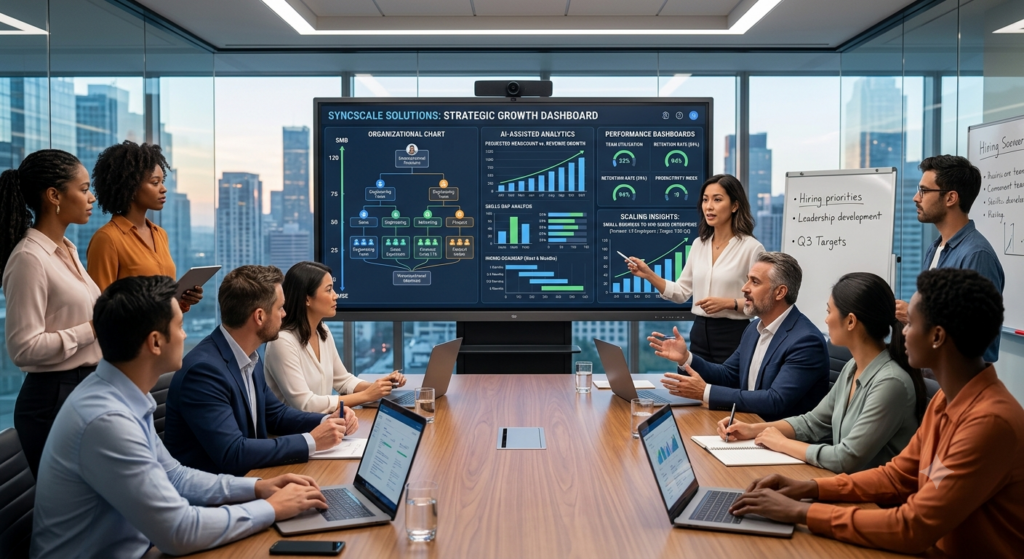
Growing a business is no longer measured by revenue alone. Sustainable growth depends on an organization’s ability to evolve its workforce, leadership, and operating model at the same pace as its commercial success. Companies that continue to manage people with small-business practices often discover that growth itself becomes their biggest operational challenge.
Part 1: Introduction
For many entrepreneurs, the journey from a small business to a mid-sized enterprise is considered a milestone of success. Revenue increases, customer portfolios expand, new markets open, and recruitment accelerates. Yet beneath these visible indicators lies a less obvious reality: organizational growth introduces a new level of workforce complexity that many businesses are unprepared to manage.
During the early stages of a company’s lifecycle, business owners often operate through direct involvement. Teams are small, communication is informal, and decisions are made quickly. Employees wear multiple hats, reporting structures are flexible, and operational knowledge often resides with a handful of experienced individuals.
While this approach works during the startup and early growth stages, it rarely scales effectively.
As organizations grow, new departments emerge, reporting relationships become more complex, customer expectations increase, and operational risks multiply. The very practices that once enabled agility can gradually become obstacles to sustainable expansion.
Today’s business leaders are therefore facing a new question not “How do we hire more people?” but rather: “How do we build a workforce capable of supporting our next stage of growth?” This shift represents one of the defining management challenges for modern businesses.
Recent global research reinforces this perspective. Deloitte’s 2026 Global Human Capital Trends report1 found that 7 in 10 business leaders identify speed and adaptability as their primary competitive strategy over the next three years, emphasizing that organizations increasingly gain advantage through how effectively they orchestrate people, work, and technology rather than through technology investments alone.
For growing businesses, workforce management is therefore no longer an administrative function. It has become a strategic capability that directly influences business performance, customer satisfaction, operational resilience, and long-term competitiveness.
Workforce Management Challenges During Business Growth
Growth is often celebrated as the ultimate objective of every business. Ironically, growth is also the stage where many organizations begin experiencing internal instability.
Business owners commonly encounter situations such as:
- Recruitment outpaces onboarding capability.
- Managers supervise larger teams without formal leadership training.
- Departments operate independently instead of collaboratively.
- Communication becomes fragmented.
- Decision-making slows.
- Customer expectations rise faster than internal capabilities.
None of these challenges indicate failure. Instead, they signal that the organization has entered a new stage of maturity requiring a different operating model.
One of the most common misconceptions among growing businesses is assuming that workforce management simply means recruiting additional employees.
In reality, workforce management encompasses a much broader strategic framework, including:
- Workforce planning
- Organizational design
- Leadership development
- Skills management
- Performance measurement
- Workforce productivity
- Employee engagement
- Talent retention
- Succession planning
- Continuous capability development
Organizations that invest in these capabilities early are significantly better positioned to scale without sacrificing agility or organizational culture.
Why Workforce Management Has Changed
Historically, workforce management focused primarily on scheduling employees, managing attendance, payroll administration, and maintaining compliance. Today’s business environment demands something entirely different.
Digital transformation, hybrid work, artificial intelligence, changing employee expectations, global talent markets, and rapidly evolving customer requirements have fundamentally reshaped how organizations think about their workforce.
The modern workforce is expected to be:
- Adaptable
- Collaborative
- Technology-enabled
- Data-driven
- Continuously learning
- Customer-focused
At the same time, leaders must balance operational efficiency with employee experience, innovation, and organizational resilience.
McKinsey’s research on AI in the workplace highlights an important observation: the greatest barrier to scaling AI and workforce transformation is often leadership readiness rather than employee readiness. While employees are increasingly prepared to embrace new technologies, leadership teams frequently struggle to redesign work, processes, and decision-making at the pace required for growth2.
For scaling businesses, this distinction is critical. Technology alone does not create a high-performing organization. People, supported by effective leadership and well-designed business processes, remain the primary drivers of sustainable growth.
Part 2 – Modern Workforce Management for Scaling Organizations
Business growth rarely follows a straight line. Revenue, customer acquisition, geographic expansion, and workforce size often grow at different speeds. While financial metrics are carefully monitored, workforce maturity frequently evolves without a structured roadmap.
One of the defining characteristics of successful mid-sized enterprises is that they recognize workforce development as a business capability rather than simply an HR responsibility. Understanding how workforce management evolves across different growth stages enables business leaders to anticipate challenges before they become operational bottlenecks.
Stage 1 – Founder-Driven Operations (5–20 Employees)
At this stage, businesses are highly entrepreneurial. The founder is involved in almost every significant decision. Communication is direct, informal, and immediate. Employees typically perform multiple roles simultaneously. Decision-making is fast because very few organizational layers exist.
Characteristics
- Founder approves most activities
- Informal reporting structure
- Minimal documentation
- Multi-skilled employees
- Customer relationships managed directly by leadership
Advantages
- High agility
- Quick decision-making
- Strong customer relationships
- Low bureaucracy
Risks
- The very strengths that drive early success eventually become constraints.
- As customer demand increases, founders often become the organization’s biggest operational bottleneck.
- Every important decision requires their involvement.
- Growth slows—not because of market demand—but because leadership capacity becomes limited.
Stage 2 – Functional Expansion (20–50 Employees)
- Growth accelerates
- Departments begin to emerge
- Sales
- Operations
- Finance
- Marketing
- Technology
- Administration
- Hiring increases rapidly
- Specialization replaces generalization
While this represents positive progress, it also introduces the organization’s first real coordination challenge.
Employees begin asking:
“Who owns this process?”
Managers begin asking:
“Who makes this decision?”
Customers begin expecting: “Consistent experiences regardless of whom they speak with.”
This is where many businesses first experience operational friction. Processes that worked with fifteen employees become increasingly unreliable with forty.
- Duplicate work
- Communication gaps
- Department silos
- Delayed approvals
- Founder fatigue
- Customer inconsistency
Stage 3 – Structured Growth (50–150 Employees)
This is arguably the most difficult phase in the growth journey. Many businesses successfully reach this stage. Far fewer successfully move beyond it.
Why?
Because the organization is no longer small enough to operate informally. Yet it has not become mature enough to operate systematically. Business leaders suddenly face challenges they have never encountered before.
Example:
- Middle management capability
- Leadership consistency
- Employee retention
- Organizational culture
- Cross-functional collaboration
- Performance management
- Workforce planning
Many businesses incorrectly feel they require additional workers. In actuality, they require better organizational mechanisms.
According to the OECD (Organisation for Economic Co-operation and Development), many SMEs suffer throughout the scale-up process not due to a lack of market prospects, but because organizational competencies such as management practices, workforce skills, and leadership systems do not change at the same rate as business growth. This phenomena occurs in both established and emerging economies.
The “Scaling Wall“
Business advisors frequently describe a period commonly experienced between approximately 50 and 200 employees.
- Revenue continues growing
- New customers arrive
- Projects increase
- Yet productivity seems to plateau
- Employees become busier than ever
- Managers work longer hours
- Leadership meetings become more frequent
- Ironicall…
- Results improve much more slowly
This phenomenon is often called the Scaling Wall.
Symptoms of scaling wall and observation are,
✔ Everyone appears busy
✔ Meetings increase
✔ Decisions take longer
✔ Customer issues become harder to resolve
✔ Employee turnover begins increasing
✔ Departments blame one another
✔ New hires require excessive supervision
✔ Founders spend less time growing the business and more time solving internal problems
These are caused by workforce maturity and not by caused by workforce size.
Why Companies Become Stuck
1. Hiring Faster Than Integration
Recruitment focuses on filling vacancies with slight attention is given to:
- Onboarding
- Capability development
- Role clarity
- Knowledge transfer
New employees therefore require longer periods to become productive.
2. Leadership Doesn’t Scale
- The founder continues managing as though the company has twenty employees.
- Decision-making remains centralized.
- Managers hesitate to make independent decisions.
- Innovation slows.
- Employees become dependent on leadership approval.
- Eventually the organization becomes limited by one person’s available time.
3. Processes Exist Only in People’s Heads
- Many growing businesses rely on experienced employees rather than documented processes.
- When those employees leave:
- Knowledge leaves with them.
- Productivity declines.
- Training restarts from scratch.
- Operational risk increases.
4. Technology Is Added Without Process Improvement
Many organizations purchase ERP systems, CRM software, HR platforms, Collaboration tools believing technology alone will improve performance and accelerates good processes improving the poor ones. Without clearly defined workflows, software simply digitizes inefficiency.
Shift from Owner-Led to Process-Led Organizations
One of the most major shifts happens when firms go from depending mostly on individual skills to functioning using standardized methods. This move does not limit entrepreneurial flexibility. Instead, it establishes consistency. Individuals have a critical role in owner-led enterprises. Process-led enterprises rely on repeatable business skills. This distinction becomes increasingly significant as businesses grow geographically, enter new markets, diversify their offerings, or establish new business units.
Building Workforce Management Capability for Scale
Instead of asking: “Who should perform this task?”
Growing organizations are increasingly asking: “How should this work every time?”
This minor shift transforms workforce management. Employees feel empowered because expectations are clear. Managers gain trust as decision authority is defined. Leadership develops visibility as performance becomes measurable. Customers obtain consistent treatment because outcomes are no longer based exclusively on individual experience.
Leadership’s Role in Workforce Management
Workforce expansion may not be the most difficult change during company growth.
It’s about leadership evolution. Founders who excelled at fixing operational difficulties must eventually evolve into organizational architects rather than operators.
Doing ➤ Managing ➤ Leading ➤ Developing leaders ➤ Building organizational capability
This change necessitates trust, delegation, structured governance, and a willingness to let systems replace personal intervention where possible. Organizations that effectively manage this development develop resilience that extends far beyond their founder.
Scaling businesses do not succeed just by hiring more employees. They are effective because they build an organization in which people, leadership, procedures, and technology all advance together. Workforce maturity, therefore, is not a measure of personnel count, but of organizational capabilities.
Stage 4 – Integrated Enterprise (150–500 Employees)
Scaling businesses do not succeed just by hiring more employees. They are effective because they build an organization in which people, leadership, procedures, and technology all advance together. Workforce maturity, therefore, is not a measure of personnel count, but of organizational capabilities.
Characteristics
- Clear organizational hierarchy
- Standard Operating Procedures (SOPs)
- Departmental KPIs
- Performance management framework
- Cross-functional collaboration
- Leadership accountability
- Digital business systems (ERP, CRM, HRMS, BI)
Workforce Priorities
- Leadership development
- Succession planning
- Skills development
- Workforce analytics
- Employee engagement
- Productivity optimization
- Organizational resilience
Technology Focus
- Enterprise Resource Planning (ERP)
- Human Resource Management Systems (HRMS)
- Business Intelligence (BI)
- AI-assisted reporting
- Workflow automation
- Knowledge management
Technology is no longer used to tackle individual problems; instead, it is integrated into a whole business operating paradigm.
Stage 5 – Adaptive & Intelligent Enterprise (500+ Employees or Highly Mature Organizations)
The most advanced stage of workforce maturity is distinguished by constant adaptation rather than organizational stability. These organizations anticipate change rather than react to it. Leadership focuses on creativity, resilience, and long-term capability development.
Characteristics
- Skills-based workforce
- AI-assisted workforce planning
- Predictive workforce analytics
- Continuous learning culture
- Data-driven leadership
- Agile operating models
- Innovation ecosystems
- Global collaboration
Workforce Priorities
- Workforce agility
- Strategic workforce planning
- Talent mobility
- Leadership succession
- Organizational resilience
- Continuous capability development
Technology Focus
- AI-powered workforce forecasting
- Predictive analytics
- Intelligent workflow automation
- Digital assistants
- Advanced analytics
- Knowledge graphs
- Skills intelligence platforms
Workforce Maturity Model
| Stage | Employees (Typical) | Business Focus | Workforce Focus |
|---|---|---|---|
| Stage 1 | 5–20 | Survival & Early Growth | Founder-led operations |
| Stage 2 | 20–50 | Functional Expansion | Department formation |
| Stage 3 | 50–150 | Structured Growth | Leadership & process maturity |
| Stage 4 | 150–500 | Integrated Enterprise | Governance, systems & optimization |
| Stage 5 | 500+ | Adaptive & Intelligent Enterprise | AI, analytics & continuous transformation |
The employee counts are illustrative, not absolute. Some organizations reach Stage 5 with fewer employees if they have highly mature processes and governance, while others with thousands of employees may still operate with Stage 3 characteristics.